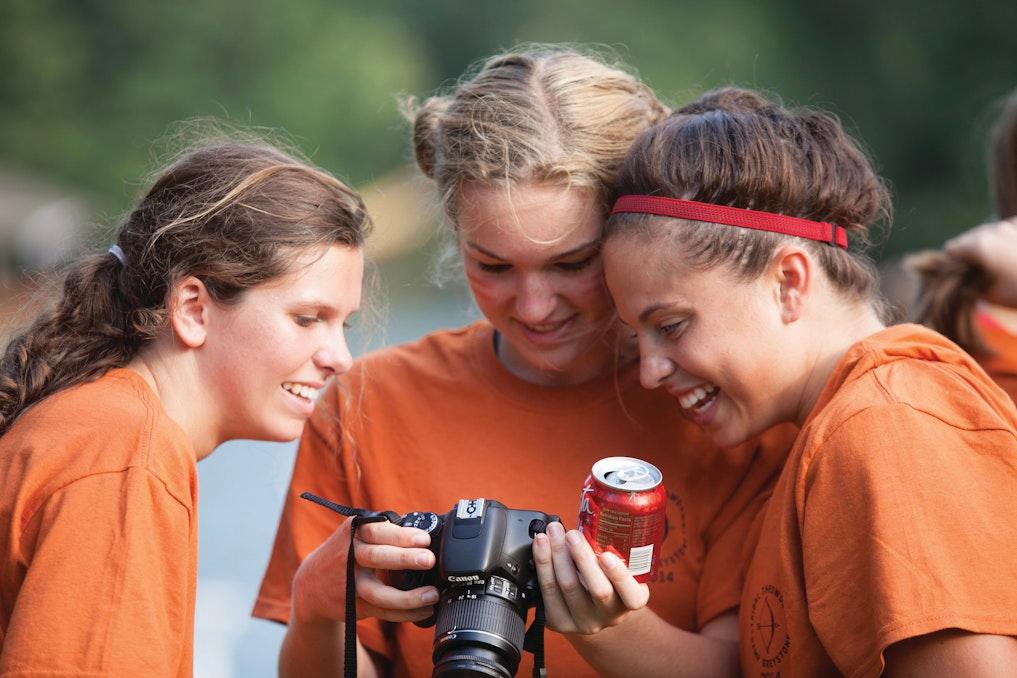
The 10 PM Refresh
Somewhere right now, a parent is refreshing your photo gallery like it's a stock ticker and their kid is the portfolio. The photo feed is the most scrutinized thing your camp produces all summer — and at most camps, nobody's actually in charge of it. How the good operations run theirs.
It's 9:47 on a Tuesday night in July. In a kitchen four hundred miles from your waterfront — or four miles from your soccer field, the distance doesn't change the physics — a mother is refreshing your camp's photo gallery for the eleventh time since dinner. She is looking for one face. She found it yesterday (back of a canoe, sunscreen applied in what can only be described as a gesture toward sunscreen), and now the feed is thirty hours stale and she has begun to construct theories.
Meanwhile, the counselor who took four hundred photos today is asleep with wet socks on, and the phone with the photos on it is charging in the office next to a walkie-talkie and half a granola bar.
That gap — between the eleventh refresh and the charging phone — is what this column is about.
The feed is not a nice-to-have. It's the product demo.
Here's the thing nobody puts in the staff manual: for a resident camp, the photo feed is the only window parents have into the thing they bought. They wired you a significant amount of money and handed you their entire kid, and in exchange they get — pictures. That's the deal. For day camps the physics differ but not the stakes: the feed competes with the car line, and "how was camp?" answered with a shrug at pickup gets litigated that night against your gallery.
And every director knows, even if nobody says it out loud, that the feed is doing next summer's enrollment work right now. A parent who spends July watching their kid grin through your program does not comparison-shop in January. The photo feed is retention marketing that happens to be adorable. Camps that treat it as an afterthought are running their best ad campaign by accident, badly.
The hardest unassigned job at camp
At most camps, photography is a hope, not a job. The hope is that counselors — who are currently applying bug spray to twelve children while adjudicating a dispute about whose turn it was — will also produce daily documentary coverage. What you get from a hope is four hundred photos of the same six extroverted kids and a gallery-wide absence of the quiet ones.
Every experienced director knows about the list. The mental one. The kids who are never in the photos. Parents notice by day three — noticing is the entire activity — and the resulting email does not open with "I'm sure it's an oversight."
The camps that get this right run it like a job, because it is one:
Somebody owns it. A designated photographer, a media-CIT, a rotation with names on it — anything but "everybody," which is the org-chart spelling of "nobody."
There's a shot list, and it's boring on purpose. Every group, every day. Activities, not just faces. The unglamorous coverage math — "every camper appears at least every two days" — checked against reality, not vibes. Several camp photo platforms now do this check automatically with face-matching that can find your camper faster than her grandmother scrolling at Thanksgiving; whether that's delightful or unsettling is a question for another column, but as an operational audit for the never-in-photos problem, it works, and the parents have already voted with their refresh buttons.
The schedule beats the volume. Here is the single cheapest fix in camp communications: tell parents when photos post. "New photos Tuesday and Friday by 8 PM" converts the eleventh refresh into two calm visits. An erratic feed of six hundred photos generates more anxiety than a predictable feed of sixty, because the anxiety was never about quantity — it was about not knowing when to look. You cannot out-photograph an unmanaged expectation. I have watched camps try. There were tripods involved.
Somebody looks before it posts. Not for perfection — sunscreen smears and mud outperform anything staged; parents can smell a lineup photo — but for judgment. Photo permissions honored (the roster of kids who can't appear publicly is a real list with real reasons behind it, custody and safety among them — this is the part of the job with zero comedy in it and it gets checked every single time). No shots that map out routines and locations for anyone who shouldn't have them. Captions that give context without giving a stranger a schedule.
What the feed is actually made of
Underneath all of it, the photo feed is a trust machine, and it runs on a simple exchange: evidence for anxiety. Every posted photo says your specific child is okay, fed, sunscreened-ish, and visibly mid-childhood. That's what the mother in the kitchen is buying at 9:47 PM, and it's why this is worth a director's attention in the busiest month of the year — the feed is the one part of your operation that every single customer inspects, personally, daily, with the zoom feature.
Run it like it matters. Assign it, schedule it, audit it, and screen it. Then post the photo of the kid with the sunscreen gesture, because that one — not the tripod one — is the one that gets texted to grandma with three exclamation points, and grandma, it turns out, has opinions about where her people enroll.
Somewhere out there it's 9:47 again. Post the photos. She's refreshing.
Author
Denny MarshEditorial byline, CampBuzz
Denny Marsh covers camp operations for CampBuzz: what happens on the ground during a season, and the parts the brochure leaves out.